The concept of a self-driving car, once relegated to the realm of science fiction and speculative futurism, has now firmly cemented its position as the undisputed next major frontier in automotive engineering. It promises to revolutionize not just our commutes but the very structure of urban and societal life. At its core, the transformation involves delegating the complex, constant “dynamic driving task”—steering, accelerating, braking, and monitoring the environment—from the fallible human operator to an array of advanced, interconnected computer systems and sensors.
This sophisticated handoff holds the potential to dramatically reduce the estimated 94% of traffic accidents caused by human error. This leads to significantly safer roads, lower insurance costs, and ultimately saving thousands of lives annually. However, achieving true, universal autonomy requires an intricate fusion of diverse technologies, including high-definition mapping, complex machine learning algorithms, and real-time sensor processing. All of this must work harmoniously in unpredictable real-world environments.
Successfully navigating this technological and ethical landscape is the central challenge facing engineers and policymakers globally. The seamless operation of an autonomous vehicle hinges on its ability to perceive the world with greater clarity and react with superior speed and consistency compared to any human driver. This detailed article explores the fundamental technologies, demystifies the industry-standard levels of automation, and outlines the major hurdles that must be cleared before the driverless future becomes an everyday reality for all of us.
The Core Technology: How Cars See and Think
Autonomous vehicles are essentially supercomputers on wheels. They perceive the world using an array of sophisticated sensors and process that data using artificial intelligence (AI).
The car’s ability to drive itself comes from constantly executing a critical loop: Perception, Localization, Planning, and Control. This loop must happen many times per second to ensure safe, real-time driving decisions.
I. Perception: The Car’s Sensory Array
To drive safely, the vehicle must build a continuous, accurate, 360-degree virtual model of its surroundings. This is achieved through a combination of redundant sensor types.
A. Lidar (Light Detection and Ranging)
Lidar is a crucial component that uses harmless laser pulses to measure distance. It creates highly accurate 3D point cloud maps of the environment.
1. A. High-Definition Mapping: Lidar excels at creating a precise, geometric map of stationary objects, such as lane boundaries, infrastructure, and buildings. It is invaluable for accurate localization.
2. B. Depth Perception: Unlike cameras, Lidar directly measures depth regardless of light conditions (though dense fog can be a challenge). It provides highly reliable distance data to the central computer system.
B. Radar (Radio Detection and Ranging)
Radar emits radio waves and measures the reflections. This makes it excellent for detecting the speed and distance of objects, particularly other vehicles.
1. C. Speed and Velocity Tracking: Radar is the best sensor for instantly determining an object’s velocity. This makes it foundational for features like adaptive cruise control (ACC) and automatic emergency braking (AEB).
2. D. All-Weather Capability: Radar penetrates fog, rain, and snow better than Lidar and cameras. This makes it a crucial redundant layer when visibility is poor, ensuring all-weather operation.
C. Cameras and Computer Vision
Cameras provide the rich, high-resolution visual data necessary for understanding context and reading subtle cues, much like human eyes.
1. E. Object Classification: Computer Vision (CV) algorithms analyze camera images to identify and classify objects (e.g., distinguishing a pedestrian from a sign or a bicycle). This requires massive training datasets.
2. F. Traffic Signal Interpretation: Cameras are necessary to read and understand dynamic information like traffic lights, temporary construction signs, and lane markings, especially when they are faded or obscured.
II. Processing and Intelligence: The Brain
Raw sensor data is useless without a powerful onboard computer system—the vehicle’s brain—to process it and make instantaneous decisions.
D. Sensor Fusion
Sensor fusion is the process of intelligently combining the data streams from all sensors (Lidar, Radar, Cameras, GPS) to create a single, robust, and reliable view of the world.
1. G. Redundancy and Reliability: By cross-referencing data from multiple sensor types, the system can achieve greater reliability than any single sensor could alone. If a camera is blinded by the sun, the Lidar and Radar can compensate.
2. H. Data Synthesis: Fusion allows the system to not only know where an object is (from Lidar/Radar) but also whatthat object is (from Cameras/AI). This synthesis is essential for complex decision-making.
E. Artificial Intelligence (AI) and Machine Learning (ML)
AI and ML are the sophisticated software that enable the car to learn, predict behavior, and navigate complex social interactions on the road.
1. I. Behavioral Prediction: Advanced neural networks are trained on billions of miles of real-world driving data. This allows the vehicle to predict the likely future actions of pedestrians, cyclists, and other drivers, such as a likely lane change or a sudden stop.
2. J. Decision Making: The AI uses the perceived environment and its behavioral predictions to calculate the safest and most efficient path forward. This involves continuously adjusting steering angle, acceleration, and braking commands.
III. The Six Levels of Driving Autonomy (SAE J3016)
To standardize development and regulation, the Society of Automotive Engineers (SAE) established a clear framework defining six levels of automation. These range from fully manual to fully autonomous.
F. Driver Responsibility Levels (Levels 0, 1, 2)
In these foundational levels, the human driver is responsible for the overall dynamic driving task (DDT) and must constantly monitor the environment.
1. K. Level 0 (No Automation): The human driver performs all driving tasks. Examples include basic cruise control or emergency warnings that do not actively control the vehicle.
2. L. Level 1 (Driver Assistance): The system provides intermittent assistance with either steering or acceleration/braking, but not both simultaneously. Adaptive Cruise Control (ACC) is a common Level 1 feature.
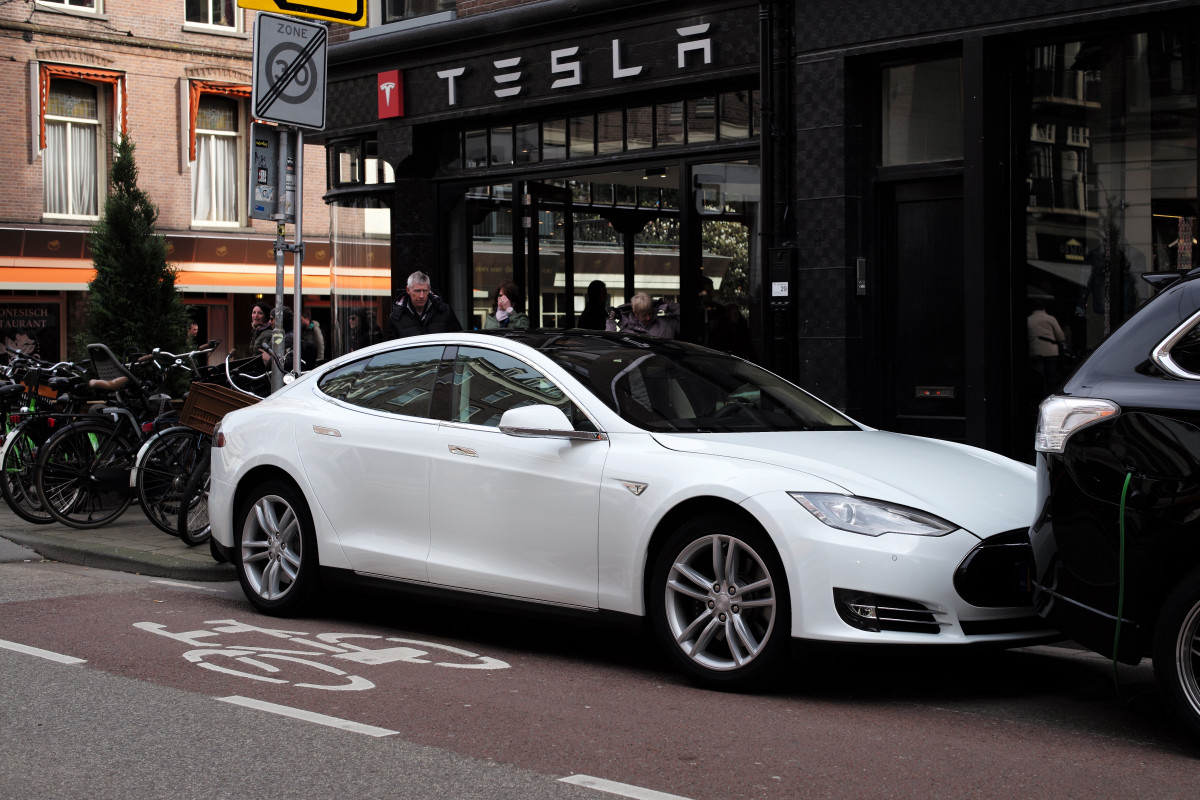
3. M. Level 2 (Partial Automation): The vehicle can control both steering and acceleration/braking simultaneously (hands-on assistance). The human driver must remain fully engaged, supervise the system constantly, and be ready to take over at any moment. Examples include highway assist systems like Tesla Autopilot or GM Super Cruise.
G. System Responsibility Levels (Levels 3, 4, 5)
In these advanced levels, the Automated Driving System (ADS) performs the DDT. The human driver is no longer required to constantly monitor the environment.
1. N. Level 3 (Conditional Automation): The ADS handles all driving tasks under specific conditions (e.g., on certain highways). When the system encounters a situation it cannot handle (an ODD exit or operational design domain exit), it issues a takeover request to the human driver. The human must be ready to take over within a few seconds.
2. O. Level 4 (High Automation): The ADS handles all driving tasks within its specified Operational Design Domain (ODD), such as a geofenced area or slow traffic. If the system fails or the ODD is exited, the car safely maneuvers itself to a minimal risk condition (e.g., pulling over) without human intervention. The driver is not required to be ready to take over.
3. P. Level 5 (Full Automation): The ADS performs all driving tasks under all road and environmental conditions, equivalent to an unassisted human driver. These vehicles would not require steering wheels, pedals, or human occupants, enabling true “robotaxis” everywhere.
IV. Major Challenges to Widespread Adoption
Despite rapid progress, several significant technological, ethical, and regulatory hurdles prevent the immediate widespread deployment of Level 4 and Level 5 autonomy.
H. Technological and Environmental Hurdles
The real world presents countless “edge cases” and difficult sensory situations that challenge current AI.
1. Q. Inclement Weather: Heavy rain, snow, dense fog, or whiteout conditions severely degrade the performance of Lidar and Cameras, making safe operation impossible without human intervention. Robust redundancy and better sensor filtering are still being perfected.
2. R. Unpredictable Human Behavior: Humans are often irrational, jaywalking, ignoring traffic signs, or making unexpected lane changes. Teaching AI the “common sense” to handle these complex social interactions is one of the hardest challenges.
3. S. High-Definition Mapping Dependency: Many Level 3 and 4 systems rely on pre-mapped, highly detailed 3D routes (HD Maps). Any deviation from this map, such as unexpected road construction or an accident diverting traffic, can confuse the system and require a human takeover.
I. Safety, Ethics, and Regulation
The legal and moral implications of autonomous decision-making in critical situations require consensus.
1. T. The Liability Question: In the event of an accident involving a Level 4 vehicle, who is legally responsible: the owner, the manufacturer, or the software provider? Clear regulatory frameworks are needed to assign legal liability.
2. U. Cybersecurity Risk: Since autonomous vehicles are constantly connected, they are potential targets for remote hacking. Protecting the car’s control systems from malicious interference is a critical and ongoing cybersecurity challenge.
3. V. Ethical Dilemmas: Developing the programming for unavoidable accidents (the “Trolley Problem”)—where the car must choose between two unfavorable outcomes—raises profound ethical questions about whose life or property the AI should prioritize.
V. The Near-Term Future: Geofenced Autonomy
The most immediate and likely path for highly automated driving involves geofencing. This restricts Level 4 operation to carefully tested and pre-mapped areas.
J. Robotaxis and Commercial Fleets
Level 4 autonomy is already being successfully deployed in controlled commercial settings, primarily through ride-hailing services.
1. W. Geofenced Operation: Robotaxi fleets operate only within specific, high-definition mapped city boundaries (geofences). This limits the variables the AI must deal with, enabling robust, fully driverless operation within that defined service area.
2. X. Reduced Operational Costs: The elimination of the human driver in these commercial fleets promises huge savings for ride-hailing and logistics companies. This makes this the most financially viable near-term application of full autonomy.
K. The Infrastructure Connection (V2X)
True safety and efficiency across the entire transportation network will require vehicles to communicate not just with each other but with the surrounding infrastructure.
1. Y. Vehicle-to-Vehicle (V2V): V2V communication allows cars to share real-time data about their speed, position, and intentions. This dramatically enhances collision avoidance and traffic flow.
2. Z. Vehicle-to-Infrastructure (V2I): V2I allows the car to communicate with traffic lights, road sensors, and construction warnings. This gives the AI pre-emptive information, allowing for smoother, more efficient driving and fewer sudden stops.
Conclusion
The future of driving is undeniably autonomous, driven by the compelling societal promise of drastically improved road safety and enhanced mobility for all citizens.
The backbone of this revolution is a sophisticated sensor array that includes Lidar, Radar, and Cameras, which the vehicle combines through sensor fusion to construct a reliable, three-dimensional understanding of its dynamic surroundings.
The complexity of true self-driving is codified by the SAE’s six levels, clearly distinguishing between systems where the human must remain vigilant (Level 2) and those where the car assumes complete responsibility (Levels 4 and 5).
Progress toward higher levels of autonomy is heavily reliant on breakthroughs in Artificial Intelligence and Machine Learning, which must be trained to anticipate and react to the unpredictable, often irrational, social behavior of human drivers and pedestrians.
Major practical hurdles remain, particularly the development of systems that can reliably perceive and navigate during inclement weather conditions and the time-intensive process of creating high-definition maps for all road networks.
Policymakers must urgently resolve critical ethical and regulatory challenges, primarily concerning legal liability in the event of an unavoidable accident and the necessity for robust cybersecurity protocols to protect against external attacks.